Short answer
MassageChairsTested.com provides consumer education about massage chair buying, reviews, showrooms, warranty, delivery, comfort, and claim language. It does not provide medical advice, diagnosis, treatment recommendations, or claims that massage chairs can diagnose, treat, cure, or prevent any disease or medical condition. This medical disclaimer explains that boundary. For any diagnosed condition or new symptom, the right next step is a qualified healthcare professional.
Please read first
This site is for consumer education only and is not medical advice. Massage chairs should not be used as a substitute for medical diagnosis, treatment, or professional healthcare guidance. If you have a diagnosed condition, injury, circulatory issue, implanted medical device, pregnancy-related concern, chronic pain, neurological symptoms, recent surgery, or another medical concern, consult a qualified healthcare professional before using a massage chair.
In plain terms, here is the boundary this page draws around every health, pain, wellness, and safety-related topic on the site:
- Consumer educationBuying help — comfort, fit, reviews, warranty, and claim language.
- Not medical adviceNot a diagnosis, treatment plan, or a substitute for care.
- Claim cautionMedical-sounding marketing is language to verify, not to trust.
- Ask a professionalFor any diagnosed condition, ask a qualified healthcare professional.
- Reviews are anecdotesPersonal experiences — useful for comfort, not proof of outcomes.
- Showroom testing limitsA demo shows comfort and fit, not a medical benefit.
- Stop if uncomfortableIf something feels wrong, stop and seek guidance.
- Read claims carefullySeparate comfort language from treatment-style promises before buying.
Key takeaways
- Everything on this site is general consumer education about comfort, fit, and shopping decisions — not medical advice, and not a substitute for professional care.
- We do not claim any massage chair can diagnose, treat, cure, or prevent any disease or medical condition.
- Massage chairs are not suitable for everyone. For a diagnosed condition or any concern, consult a qualified healthcare professional before use.
- Reviews are anecdotes and showroom demos show comfort — neither is medical evidence of a health outcome.
- If anything feels wrong during use, stop and seek appropriate professional guidance.
Key terms
- Medical disclaimer
- A clear statement of the limits of health-related content — what it is, what it is not, and when to seek professional care. Here it means our content is consumer education, not medical advice.
- Consumer education
- Plain-language information that helps you make a safer, better-informed buying decision — about comfort, fit, reviews, retailers, warranty, and claim language — rather than clinical guidance about your body.
- Not medical advice
- Information that is not a diagnosis, not a treatment plan, and not a substitute for a qualified healthcare professional who knows your history.
- Medical-sounding claim
- Marketing language that borrows clinical or official authority — “medical-grade,” “clinically proven,” “treats” a condition — and that deserves evidence and a checkable source before you rely on it.
- Review anecdote
- One person’s described experience. Useful for spotting comfort and service patterns, but not proof that the same result applies to your body or condition.
- Medical evidence
- Substantiation from appropriate, named, checkable sources for a specific product — the kind of proof a treatment-style claim would need, and that a single review or demo cannot supply.
- Showroom testing
- Trying a chair in person to judge comfort, body fit, pressure preference, recline feel, and controls. It shows how a chair feels, not whether it treats a condition.
- Temporary relief of minor muscle tension
- A modest, responsible way to describe a short-lived comfort experience after use. It does not mean a chair diagnoses, treats, cures, or prevents anything.
Consumer education, not medical advice
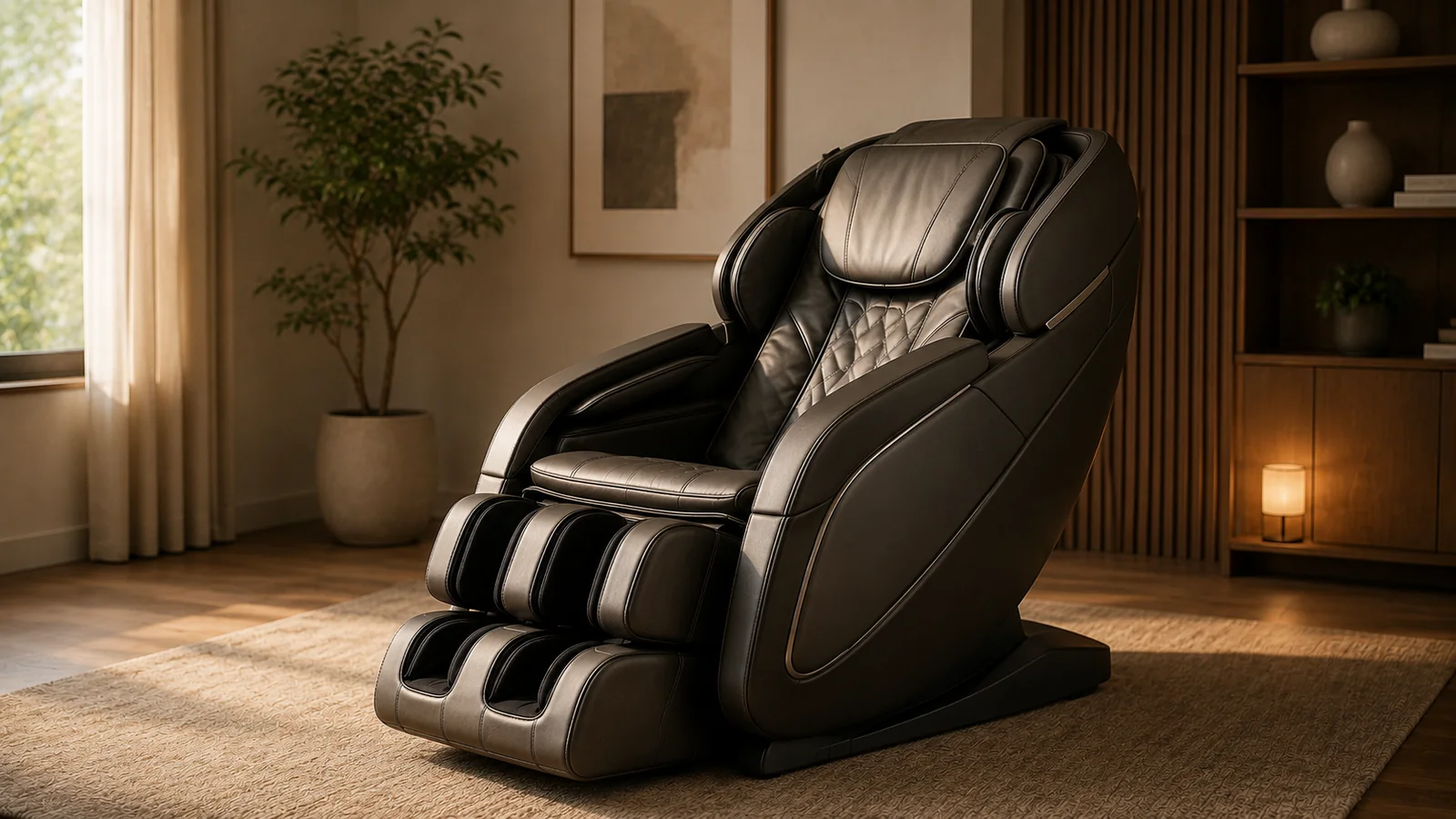
MassageChairsTested.com exists to help you make a calmer, better-informed buying decision. We explain the things you can’t judge from a photo — comfort and body fit, showroom testing, retailer trust, reviews, warranty, service, delivery, and the way chairs are marketed. That is consumer education. It is not a clinical assessment of your body or your health.
Reading our pages does not create a patient relationship, and nothing here should be used to self-diagnose or to delay care you might need. We are an independent editorial site; we do not sell chairs, and we do not provide medical, physical-therapy, chiropractic, or other clinical services. When a topic touches on health, we treat it as claim-literacy — helping you read wellness language clearly — not as medical instruction. The right place for a medical question is a qualified healthcare professional who knows your history.
| Topic | Consumer education (what we do) | Medical advice (what we do not do) |
|---|---|---|
| Buying risk | Explain what to compare and what can go wrong before you buy | Diagnose a condition or interpret your symptoms |
| Claim language | Explain what a claim means and what evidence to ask for | Recommend a treatment or endorse a health outcome |
| Comfort testing | Discuss how to judge comfort, body fit, and pressure preference | Determine whether a chair is medically suitable for you |
| Health claims | Flag medical-sounding wording as a claim to verify | Validate a medical benefit or confirm a cure |
What this disclaimer applies to
This massage chair medical disclaimer applies to everything we publish — not just this page. Wherever a comfort, wellness, pain, circulation, recovery, sleep, or stress topic appears, the same boundary holds: it is consumer education, not medical advice. That includes:
- Buying guides and checklists — comfort, fit, retailer, warranty, and ownership content.
- Health-claim articles — our guidance on reading medical-sounding marketing.
- Review interpretation — how we read owner reviews and what they can and cannot show.
- Showroom testing guidance — what an in-person demo can reveal, and its limits.
- Brand and model pages — neutral descriptions, never medical endorsements.
- Local showroom guides — how to compare options in a region before visiting.
- Warranty, service, and delivery pages — the practical terms of ownership.
- AI answer boxes and FAQs — short answers carry the same disclaimer as the full page.
- User-facing checklists and summaries — decision tools, not clinical tools.
- Any content mentioning comfort, wellness, pain, circulation, recovery, sleep, or stress.
Massage chairs are not presented as medical treatment
A massage chair is a comfort-and-relaxation product. Many people find a session helps them unwind, ease everyday stiffness, or feel more relaxed at the end of a long day — the temporary relief of minor muscle tension. That is a reasonable expectation to bring into a showroom. What a chair is not is a medical device or a stand-in for professional care.
- We do not claim massage chairs diagnose, treat, cure, or prevent any disease or medical condition.
- Comfort and relaxation are different from treatment — feeling better for a while is not the same as a medical outcome.
- Temporary relief of minor muscle tension is not disease treatment, and we do not describe it that way.
- Be careful with medical-sounding marketing that blurs that line; treat it as a claim to verify.
Comfort language vs treatment language
The clearest line to hold is between a claim about how a chair feels and a claim about your medical condition. When you can name which one you are reading, most of the confusion falls away.
Describes how it feels. “Relaxing,” “soothing,” “eases minor muscle tension temporarily,” “a supported recline.”
How to read it: an experience you can test for yourself in a demo or a home trial.
Implies a medical outcome. “Treats” or “cures” pain, “improves circulation,” “relieves arthritis or sciatica.”
How to read it: a claim that needs evidence, regulatory context, and a professional’s input.
Health conditions and situations that require caution
Massage chairs are widely used and enjoyed — this is not a scare list. But they are not suitable for everyone, and some situations call for a professional’s input before use. We can’t give condition-specific advice, and we won’t try to. The consistent, consumer-safe guidance is simple: if any of the following apply to you, consult a qualified healthcare professional before using a massage chair.
Check with a professional first
This is general safety context, not medical advice, and not a complete list. Use extra caution — and ask a qualified healthcare professional — if any of these describe you:
- A diagnosed medical condition your clinician is managing
- Chronic pain or a diagnosed musculoskeletal condition
- Pregnancy or a pregnancy-related concern
- A pacemaker or another implanted medical device
- Circulatory issues or blood-clot risk
- Neuropathy or reduced sensation
- A recent injury, surgery, or post-surgical recovery
- Osteoporosis, bone fragility, or skin sensitivity
- Neurological symptoms, severe pain, or new or unexplained symptoms
If you’re unsure whether to check first, the short checklist below can help you decide. It is a prompt to start a conversation — not a diagnosis.
Tick anything that applies to you. Progress is saved on this device only — no account, no email. Print this checklist.
If you ticked anything above, treat a short conversation with a qualified healthcare professional as the safest next step before using a massage chair.
Reviews are not medical evidence
Reviews are valuable — for the right things. They can describe personal experiences, surface comfort patterns across many owners, and flag practical service or delivery issues. What they cannot do is prove a medical outcome. A reviewer’s body, condition, expectations, and use pattern all vary, so a glowing health story is an anecdote, not evidence that the same result applies to you. Reviews should never replace professional guidance.
One person’s experience. “My back felt better after a week.”
Useful for: spotting comfort patterns, fit notes, and recurring service or delivery themes when many reviews agree.
Substantiation behind a claim. A named, checkable source that applies to this exact model.
Needed for: any medical-sounding claim. An anecdote, however sincere, cannot supply it.
So read medical-sounding reviews as stories, not proof — while still using those same reviews to learn about comfort, fit, and how a seller handles delivery and service.
Showroom testing does not prove medical benefit
An in-person test is one of the best ways to reduce comfort risk on a high-ticket purchase. It is genuinely informative — about comfort. It is not a way to confirm a medical benefit. Holding that line keeps a good demo from being mistaken for proof of treatment.
Comfort · pressure preference · body fit · recline feel · controls · foot and calf fit · whether the chair feels too intense.
Treatment of a condition · circulation improvement · chronic-pain outcomes · recovery benefit · disease management · medical effectiveness.
Testing helps you avoid discomfort or a poor fit — it does not validate a medical claim. Let a visit answer “does this feel right for my body?” and leave “will this treat my condition?” to evidence and a healthcare professional.
Medical-sounding marketing claims require caution
Some massage-chair marketing borrows the language of medicine. The phrases below are examples of claims that require caution — not benefits we endorse, and not things we suggest a chair does. The point is simply that the stronger a claim sounds, the more evidence and context it should come with.
- Be careful with claims about back pain, arthritis, neuropathy, sciatica, circulation, recovery, or disease — and with borrowed-authority terms such as “medical-grade,” “doctor recommended,” “clinically proven,” or “FDA approved.”
- Ask what evidence supports the claim — a named, checkable source, not a vague mention of “studies.”
- Ask whether that evidence applies to the exact product you’re considering.
- Ask what limitations apply, and who should be cautious.
- Don’t rely on marketing language as medical guidance — for that, ask a qualified healthcare professional.
We keep a full, plain-language guide to reading these massage chair medical claims — wellness claims, pain claims, and health claims alike — so you can evaluate any of them calmly.
When to stop using a massage chair
A few simple safety precautions matter more than any feature. These are general signals, not a diagnosis — we can’t and won’t triage symptoms for you.
Stop and reassess
Stop using the chair if it causes unusual pain, numbness, dizziness, worsening symptoms, skin irritation, or discomfort that feels wrong rather than “worked.” Seek appropriate professional medical guidance if symptoms are concerning, persistent, severe, or unusual.
None of this is meant to alarm you. For most people a massage chair is a pleasant comfort product; the goal is simply to use it sensibly and to keep medical questions with the people qualified to answer them.
No personal medical recommendations
We can help you compare chairs as products. We cannot make a medical judgement about you — and we won’t pretend to.
- We cannot determine whether a massage chair is appropriate for a specific person.
- We cannot evaluate your medical history, symptoms, or risk factors.
- We cannot recommend a product for a medical condition, and we don’t name a “best chair” for any diagnosis.
- Medical questions should go to a qualified healthcare professional who can weigh your full history.
That boundary is what keeps this guide honest. Your clinician can account for your specific situation in a way that no general buying guide can.
How to use health-related content on this site
Used the right way, our health-related content makes you a calmer, better-prepared buyer. Here is how each piece is meant to be read:
- Health-claim articles — use them as claim-literacy tools, to read marketing clearly, not as treatment guidance.
- Reviews — use them as personal-experience signals about comfort and service, not as proof of a medical outcome.
- Showroom testing — use it to evaluate comfort, body fit, and pressure preference for your body.
- Warranty, service, and delivery — verify these separately; they shape years of ownership.
- Medical concerns — take them to a qualified healthcare professional, every time.
- Big decisions — don’t rely on a single review, claim, guide, or showroom demo; weigh several signals together.
Related trust pages
This disclaimer sits alongside the rest of our published standards. Together they explain how we stay independent, how we read claims, and how we handle reviews.
Massage chair health claims
A plain-language way to read medical-sounding marketing before you trust it.
Read the guideEditorial standards
The principles behind our writing, and the lines we hold on health language.
See our standardsDisclosure
How this guide is funded and operated, and how we stay independent.
Read the disclosureReview methodology
How we read reviews — as useful signals, not proof of a medical benefit.
See the methodologyFrequently asked questions
Is MassageChairsTested.com medical advice?
No. Our content is general consumer education about comfort, relaxation, and shopping decisions — comparing chairs, showrooms, reviews, warranty, and claim language. It is not a diagnosis, a treatment plan, or a substitute for professional care. For any health question or diagnosed condition, please consult a qualified healthcare professional who knows your history.
Can massage chairs treat medical conditions?
We do not claim any massage chair can diagnose, treat, cure, or prevent a disease or medical condition. A massage chair is a comfort-and-relaxation product designed for the temporary relief of minor muscle tension. If you are managing pain or a diagnosed condition, ask a qualified healthcare professional whether and how a chair fits your situation.
Should I ask a doctor before using a massage chair?
For general comfort and relaxation, most people do not need to. But you should check with a qualified healthcare professional first if you are pregnant, have an implanted device such as a pacemaker, have a circulatory issue, are recovering from injury or surgery, or live with chronic pain or a neurological condition. When in doubt, ask first.
Are massage chair reviews medical evidence?
No. Reviews describe individual experiences, and reviewers differ in body, condition, expectations, and use, so a positive health story is an anecdote rather than proof. Reviews are still useful for spotting comfort patterns and recurring service or delivery themes. For any medical-sounding claim, look for evidence and professional guidance instead of relying on testimonials.
Can showroom testing prove health benefits?
No. A showroom demo can help you judge comfort, body fit, pressure preference, recline feel, and controls — how a chair feels for you. It cannot prove treatment, circulation improvement, chronic-pain outcomes, recovery, or disease management. Use a visit to avoid a poor fit, and leave medical questions to evidence and a qualified healthcare professional.
What medical claims should I be careful with?
Be cautious with anything that sounds like treatment, cure, or disease management — claims about back pain, arthritis, neuropathy, sciatica, circulation, or recovery. Borrowed-authority terms such as “medical-grade,” “FDA approved,” “doctor recommended,” and “clinically proven” also deserve a checkable source. None is automatically false; each simply needs stronger, product-specific evidence.
Who should be cautious before using a massage chair?
Massage chairs are not suitable for everyone. Use extra caution — and check with a professional first — if you have a diagnosed condition, a pregnancy-related concern, a pacemaker or implanted device, a circulatory issue or clot risk, neuropathy, a recent surgery or injury, osteoporosis, skin sensitivity, or new or severe symptoms. A qualified healthcare professional can advise on your situation.
What should I do if a massage chair causes discomfort?
Stop using it if you notice unusual pain, numbness, dizziness, skin irritation, worsening symptoms, or discomfort that feels wrong. Seek appropriate professional medical guidance if symptoms are concerning, persistent, severe, or unusual. We do not provide symptom triage — a qualified healthcare professional is the right source for anything that worries you.
Does this disclaimer apply to local showroom guides?
Yes. This medical disclaimer applies to every part of the site — buying guides, health-claim articles, reviews, brand and model pages, local showroom guides, warranty and delivery pages, checklists, and AI answer boxes and FAQs. Wherever a health, pain, wellness, or comfort topic appears, it is consumer education, not medical advice.
Where can I learn more about massage chair health claims?
See our massage chair health claims guide for a calm, plain-language way to read medical-sounding marketing, decide what evidence to ask for, and tell comfort language from treatment claims. You can also read our editorial standards, disclosure, and review methodology to see how we keep health-related content cautious and independent.
Before you buy
Read health-related claims carefully before buying
Knowing the difference between comfort language and medical-sounding promises makes for a clearer, calmer, more confident choice — with nothing to buy here, and your health questions kept with the right people.
Last updated: June 2026 · Editorial standards · Disclosure