Short Answer
Yes — when you can, it's worth trying a massage chair before buying. Comfort, pressure intensity, body fit, shoulder alignment, foot and calf position, and recline feel all vary from person to person, so two people can sit in the same model and have very different experiences. Online specs and reviews are useful for narrowing your options, but they can't fully predict how a chair will feel in your body. If an in-person visit isn't possible, a clear return window and good setup support are your safety net.
A massage chair is a high-ticket, deeply physical purchase, and it's one of the few you genuinely can't judge from a photo. This guide explains what an in-person test reveals that a listing can't, what to check during a showroom demo, how long to sit before deciding, and how to buy thoughtfully if testing isn't an option — all in plain, neutral terms, with no pressure to visit anyone in particular.
- Try-before-buy
- Sitting in the actual model you're considering — ideally through a full program — so you can judge comfort and fit yourself before committing.
- Showroom testing
- Evaluating a chair in person at a massage chair showroom: running programs, adjusting pressure, and checking body fit without pressure to purchase.
- Body fit
- How well a chair's rollers, airbags, seat, and leg rest line up with your height and build — the single thing a spec sheet can't confirm for you.
- Pressure preference
- How firm or gentle you like the rollers, the way some people prefer a firm mattress and others a soft one. It's personal, not a number on a page.
- Demo checklist
- A short, ordered routine for what to test during a massage chair demo so you compare chairs the same way each time.
- Comfort risk
- The chance that a chair which looks right on paper doesn't actually suit your body — the main risk an in-person test is designed to reduce.
Why Trying a Massage Chair Matters
A massage chair is a physical comfort product, not a list of features. The same model can feel excellent for one person and wrong for another, because the experience depends on your torso length, shoulder width, hip placement, and how firm you personally like the rollers. That's why testing in person — when it's possible — is the most useful single step in the whole process.
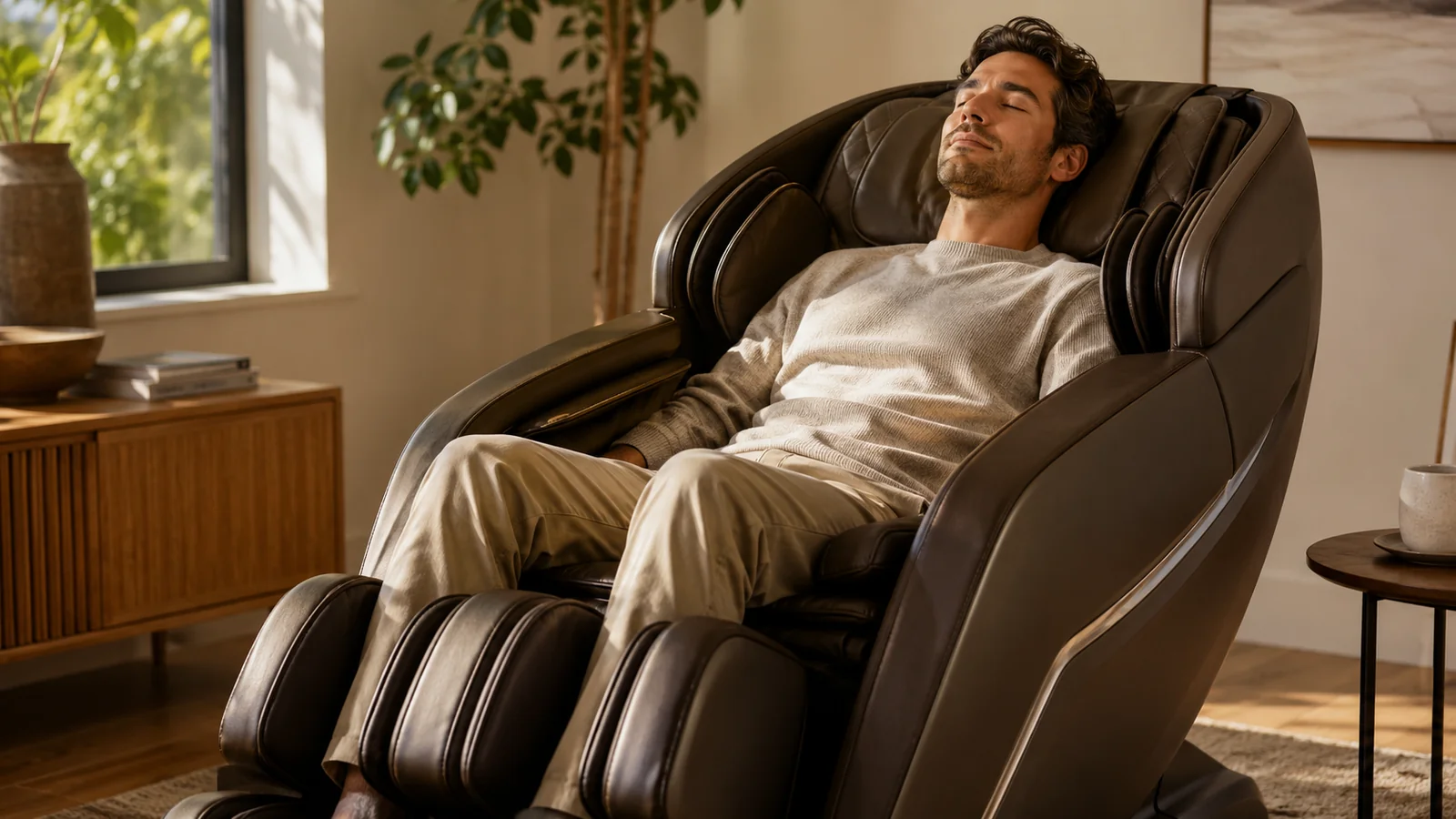
Specifications describe what a chair can do; they don't describe how it feels against your spine. Online reviews reflect someone else's body and pressure preference. And brand reputation, however strong, can't guarantee body fit. Pressure intensity is genuinely personal: one reviewer's "deep and satisfying" can feel sharp to you, and their "gentle" can feel like nothing at all. A chair that suits a tall, broad frame may leave a shorter person's shoulders below the rollers entirely. Sitting down yourself is how you turn all of that from guesswork into a decision — and it's how you reduce the comfort risk of buying something you quietly stop using.
Track length, number of airbags, program count, recline range, dimensions, stated intensity levels, and patterns in other owners' experiences.
Useful for building a shortlist of two to four models.Whether the rollers land on your shoulders, how the pressure actually feels for you, whether the recline is restful, and if your calves and feet fit.
The make-or-break factors — personal to your body.Key Takeaways
- Comfort is personal — specs and reviews describe capability, not fit.
- Pressure preference varies as much as mattress firmness; only you can judge it.
- Brand reputation doesn't guarantee body fit for your height and build.
- In-person testing is the clearest way to reduce comfort risk and purchase regret.
What You Can Only Learn by Sitting in the Chair
Some things about a massage chair only reveal themselves when your own body is in the seat. Use the map below as a set of checkpoints to test against how you are built — not how the showroom looks.
Eight points to check with your own body
Fit is personal. Sit a full program and test each checkpoint against your height, build, and pressure preference — not a brochure.
Beyond the eight checkpoints above, a real test also surfaces the quieter things a listing never mentions: seat depth, neck support, the noise level through a full cycle, how easily you can get in and out, and — most important of all — whether you'd actually use the chair regularly once the novelty fades.
Shoulder alignment and roller path
This is the make-or-break checkpoint. After the chair adjusts to your height, the shoulder rollers should reach your shoulders rather than landing on your shoulder blades or somewhere awkwardly below. Watch the roller path as it travels your back — it should track your spine, not poke at the same spot each pass.
Lower back and hip pressure
The lumbar area is where a lot of people most want support, and it's where misfit shows up fastest. Notice whether the rollers and airbags reach your lower back comfortably and whether the seat width lets your hips settle without pinching.
Foot and calf fit
Massage chair body fit isn't only about your back. The leg rest should extend to your feet without forcing your knees up, and the calf wells should cup your calves rather than squeeze them. Short and tall buyers feel this difference the most.
Recline comfort and zero-gravity feel
Try the recline and the zero-gravity position. It should feel secure and restful, and you should picture whether there's room for the chair to recline where you plan to put it at home.
Controls and ease of use
Controls and ease of use matter more than they seem. Mid-program, can you find and read the remote or screen without leaning out of position? Awkward controls tend to go unused, which quietly shrinks the value of the chair.
What to Test During a Massage Chair Demo
A massage chair demo is most useful when you run it the same way each time, so you can compare chairs fairly rather than reacting to the first impressive minute. Work through these steps in order — and wear clothing similar to what you'd wear at home.
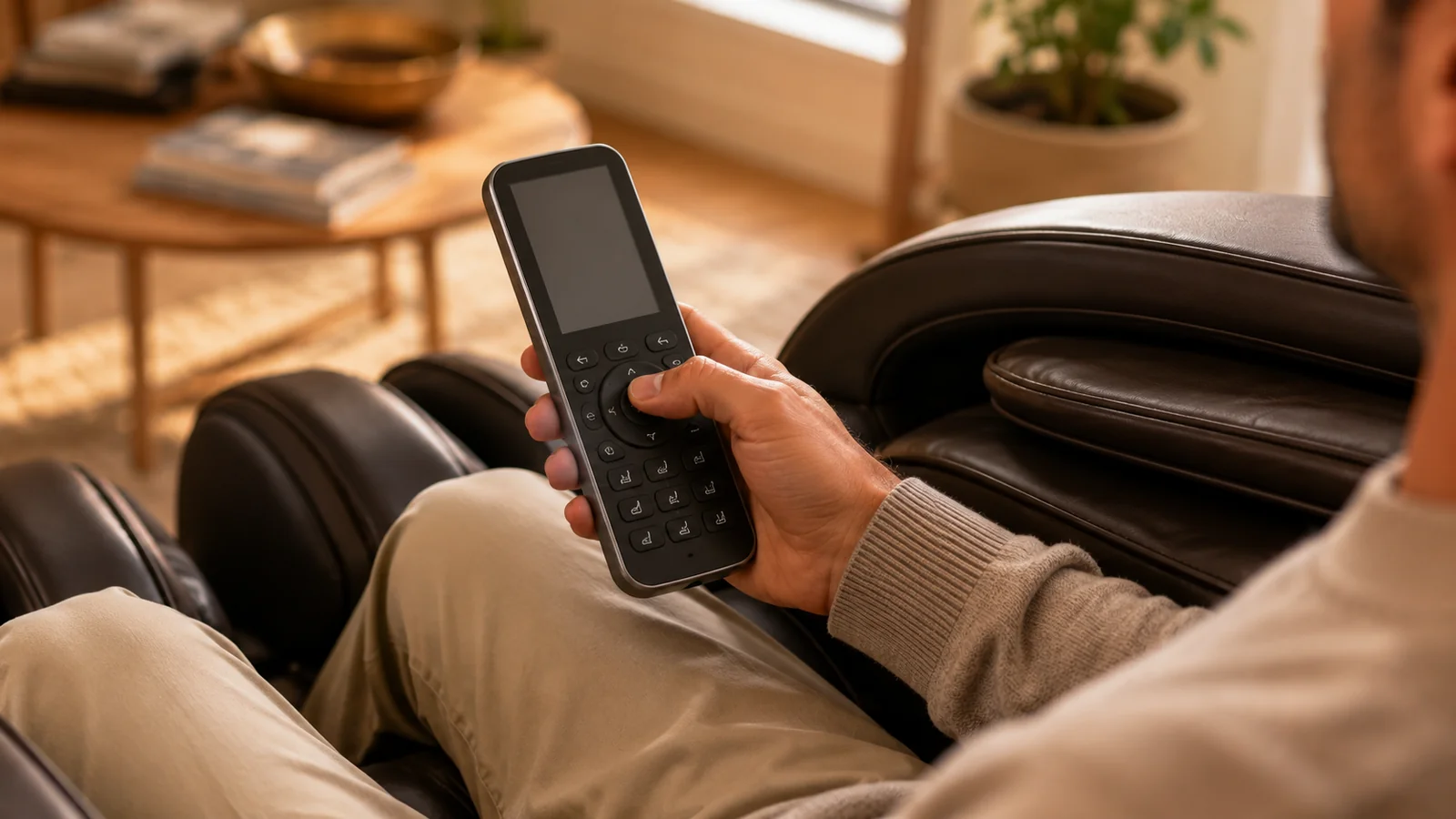
- Sit naturally before starting any program. Notice how the chair feels at rest — seat depth, back contact, where your shoulders land.
- Start with a gentle program. Let the chair scan and adjust to your height before you judge anything.
- Test the pressure adjustment. Move intensity from its lowest to its highest setting to confirm both ends of the range suit you.
- Check shoulder and neck alignment. Confirm the rollers reach your shoulders and the neck support sits where you want it.
- Check lower back and hip pressure. Notice whether the lumbar work feels supportive and the seat width is comfortable.
- Check calf and foot fit. Make sure the leg rest reaches your feet and the calf wells fit without squeezing.
- Try recline and the zero-gravity feel. See whether the tilt feels restful and secure.
- Test the controls and ease of use. Adjust settings mid-program to see how intuitive the remote or screen is.
- Sit long enough to notice discomfort. Stay in through a fuller cycle and pay attention to how you feel at the end, not the start.
- Ask warranty, service and delivery questions. Use the time to confirm what happens after the sale (see the questions below).
How Long Should You Sit in a Massage Chair Before Deciding?
There's no universal rule, and you shouldn't force it. As a rough guide: a very short sit reveals obvious misfit, a few minutes surfaces pressure and alignment issues, and a fuller program tells you how a chair feels once your body has settled. The more expensive the chair, the more it's worth sitting a complete cycle.
| Time in the chair | What it tends to reveal |
|---|---|
| A quick sit (1–2 min) | Obvious misfit — shoulders too high or low, seat too tight, leg rest too short |
| A few minutes (5–10 min) | Whether pressure and roller alignment feel right at the settings you'd use |
| A full program (15+ min) | Long-session comfort — useful for premium or expensive chairs you'd own for years |
Stop sooner if anything feels wrong — comfort testing is about preference and fit, not endurance. And it's worth saying plainly: how a chair feels in a showroom tells you about comfort and body fit, not about any medical outcome. If you're shopping because of a diagnosed condition or persistent discomfort, treat the test as a comfort check and consult a healthcare professional about the underlying issue.
When a Showroom Visit Matters Most
Trying before buying always helps, but in some situations it matters more. An in-person test is especially worthwhile when:
It's a premium or expensive chair
The more you're spending, the more a comfort mismatch costs — and the more a full-program test is worth.
You're choosing between models
Testing two or three chairs the same way is the clearest way to compare pressure and body fit side by side.
You're sensitive to pressure
If firm rollers bother you, feeling the actual intensity range matters more than any stated level count.
You're notably short or tall
Fit at the extremes of height is exactly where listings are least reliable and a sit is most revealing.
It's for an older adult or a spouse
Ease of entry and exit, controls, and comfort are worth confirming with the actual user when you can.
You've never used one before
A first in-person experience sets your expectations far better than videos or descriptions can.
It also matters when several people will share the chair, when returning a heavy chair would be difficult, or when warranty and service clarity is a real concern — all good reasons to test and ask questions before committing.
When Buying Online May Still Make Sense
Not everyone lives near a place to test, and buying online can be a perfectly sound choice. It isn't a lesser route — it simply shifts where your due diligence goes. Buying a massage chair online can make good sense when:
- The return terms are clear — you know the window, who pays return shipping, and any restocking fee in writing.
- Warranty and service support are clearly explained, including how remote service works.
- Delivery and installation are spelled out — white-glove in-home setup versus curbside drop-off.
- You've tested a similar chair before and know your pressure preference and fit.
- The model is well documented, with detailed specs and consistent recent reviews.
- The comfort risk feels acceptable to you, and the total ownership cost is transparent.
If you buy online, recreate the trial at home: run full programs over several days, in your normal spot, and judge fit honestly while your return window is still open. The goal isn't to avoid online sellers — it's to give yourself the same safety net a showroom visit would.
What Reviews and Specs Cannot Tell You
Reviews and specifications are genuinely helpful for narrowing your shortlist — but it's worth being clear about their limits. Reviews can show patterns, not personal fit. Specs can list features, not comfort. Star ratings can't prove service quality, and product videos can't reveal your pressure preference. Even "body scan" or AI-fit claims work within a chair's fixed frame, so they don't guarantee fit. And product photos can't show whether the chair fits your room or how delivery will go.
| Question | Online research helps with | In-person testing helps with |
|---|---|---|
| Which models to consider | Building a shortlist from features and reviews | Confirming the shortlist feels right in practice |
| How it feels for you | Hints from many owners' descriptions | Your actual comfort, pressure, and body fit |
| Roller and recline fit | Stated height ranges and dimensions | Where the rollers truly land on your body |
| Service & reliability | Patterns in recent, detailed reviews | Asking staff directly how repairs work |
Online reviews and specs are best for narrowing options; an in-person sit is best for confirming fit. Neither replaces the other.
What to Ask the Retailer During a Showroom Visit
A showroom visit is also your chance to confirm what happens after the sale — which can matter as much as the chair itself, since you may rely on the seller for warranty and service for years. Bring these questions:
- Which models are available to try today, and which can you run through a full program?
- How do these models differ in pressure intensity and body fit?
- Who handles the warranty, and how long is coverage for the frame, parts, and labor?
- Is in-home service available, or do repairs require shipping the chair somewhere?
- What delivery and installation options exist — white-glove setup or curbside?
- What happens if the chair doesn't fit once it's home?
- Are the return or cancellation terms clear and in writing?
- Are the wellness claims described as comfort-based, or as treatment for a condition?
- Can I bring a spouse or decision-maker to try the chair too?
For more on judging a place set up for genuine evaluation rather than a quick sale, see what makes a massage chair showroom legitimate .
Body Fit Considerations for Different Buyers
Massage chair body fit affects everyone, but different buyers feel it in different places. Here's what each tends to want to check first — all in terms of comfort, pressure preference, ease of use, and fit.
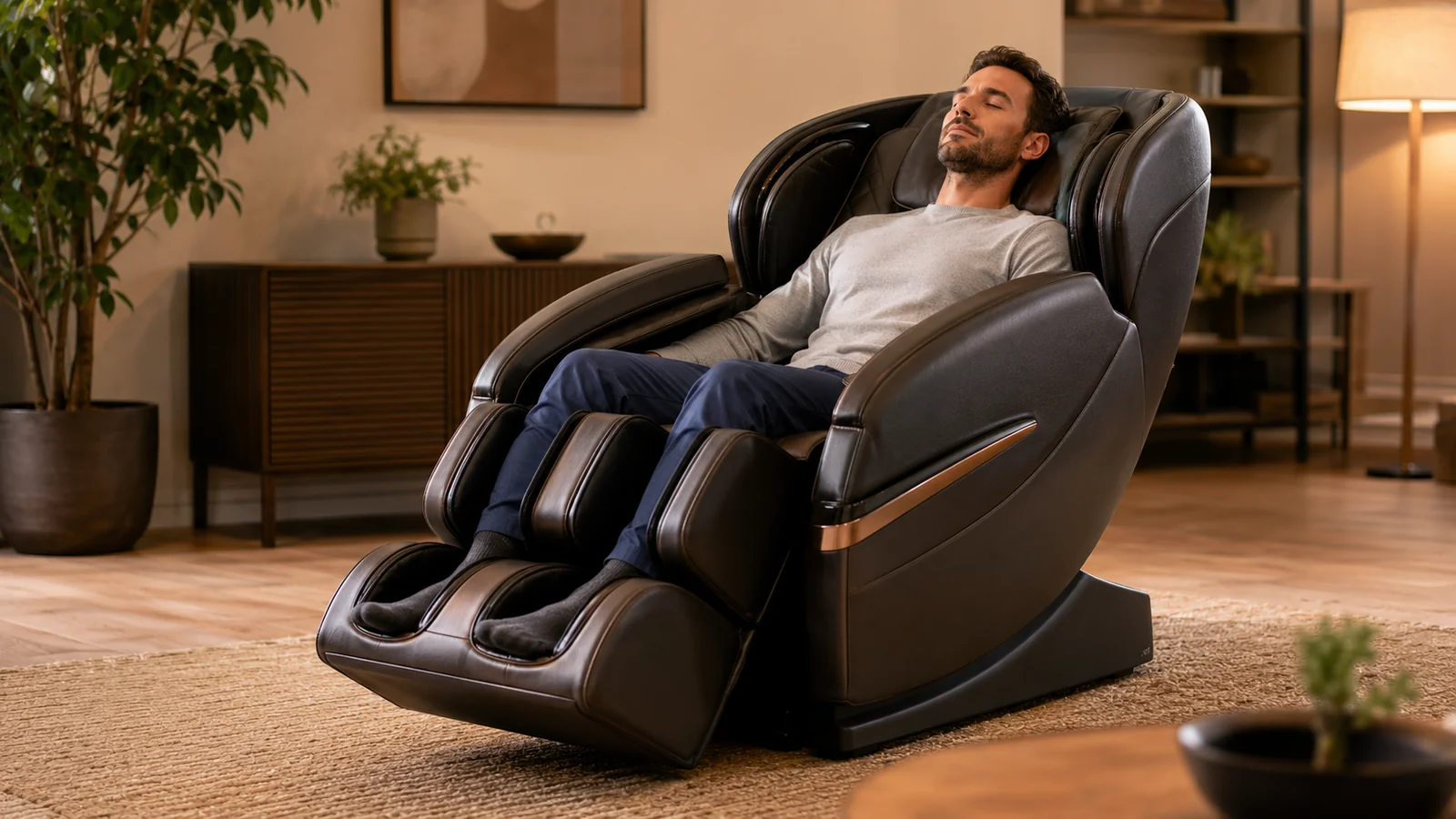
Short buyers
Check whether the rollers reach your shoulders after the chair adjusts, and whether the leg rest retracts enough that your feet still reach the footwell. A short person massage chair search is really a search for the right fit at the lower end of the height range.
Tall buyers
Check that the roller track is long enough to cover your full back and that the leg rest extends far enough for your calves and feet. For a tall person, the upper end of the height range is where comfort is won or lost.
Pressure-sensitive buyers
Feel the actual intensity range, especially the gentlest setting and any airbag-only mode. A comfortable everyday baseline matters more than an impressive maximum you'd never use.
Older adults & caregiver buyers
Prioritise easy entry and exit, simple controls, and a recline that feels secure. When you can, have the actual user try the chair rather than deciding on their behalf.
Couples & shared-use households
If two people will use the chair, both should test it, since fit and pressure preference differ. Look for adjustability that comfortably spans both bodies — and bring the other decision-maker along.
Medical-Sounding Claims and Showroom Testing
Trying a chair tells you about comfort, pressure, and fit — it doesn't prove a health outcome, and it's worth keeping those two things separate as you shop.
A calm note on claims
Showroom testing can show comfort, pressure preference, body fit, and how much you like a chair. It can't demonstrate that a chair treats or improves a medical condition. Be cautious with claims around chronic pain, circulation, recovery, or specific diagnoses. Massage chairs are best evaluated for comfort, relaxation, pressure preference, body fit, and the temporary relief of minor muscle tension — not as a substitute for medical diagnosis or treatment. For any diagnosed condition, consult a qualified healthcare professional.
Try-Before-Buy Visit Checklist
A little preparation makes a showroom visit far more useful. Tick what applies as you get ready — it's a thinking tool, not a sign-up, and nothing is saved or sent.
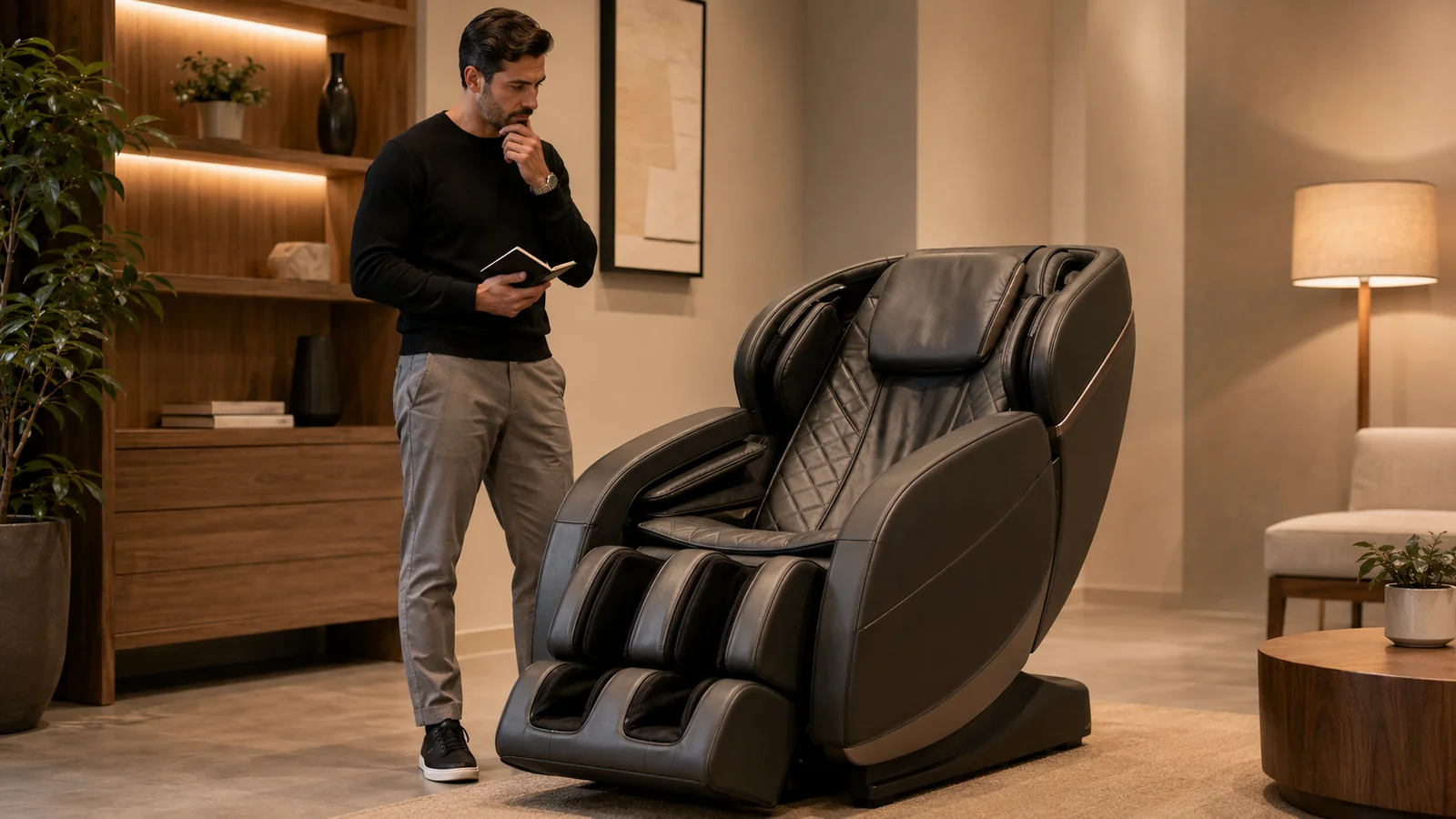
Take your time and avoid pressure to decide on the spot. Nothing here is saved or sent.
How We Built This Showroom Testing Guide
This guide is independent and consumer-first — we don't sell massage chairs, run a showroom, or take payment to feature anyone. It's built around reducing buyer risk: the comfort and body-fit factors that an in-person test reveals, the warranty, service and delivery questions worth asking, the honest limits of reviews and specs, and a claim-safety standard that keeps comfort language separate from medical-sounding promises. When our standards or methods are relevant, we link to them in the open so you can check our work.
Looking for Local Showroom Guidance?
If you're wondering where you can try a massage chair near you, our regional guides explain what to look for in a massage chair showroom and how to compare options before you go. They're guidance, not a directory of specific stores — and not places we operate or endorse.
California showroom guidance
Statewide guidance on what makes a showroom worth a visit and how to compare before you go.
California massage chair showroom guidanceBay Area showroom guidance
A closer look at evaluating showrooms across the Bay Area, using the same neutral checklist.
Bay Area massage chair showroom guidanceThese regional guides can help whether you're shopping near San Jose, Santa Clara, or elsewhere in the valley — areas where readers commonly shop, not stores we endorse. Use the same questions to compare any showroom before you visit.
Comparing Brands Before You Visit?
Once you start shopping, the same brand names tend to reappear across showrooms and listings. Recognizing them helps — but a brand name alone won't tell you whether a particular chair fits your body or your space. We list these alphabetically to help you recognize names in the market, not to rank, rate, or endorse any of them, and not to imply we've tested every brand or model.
Compare any brand or model on the same eight fronts:
- Comfort
- Body fit
- Pressure
- Warranty
- Service
- Delivery
- Reviews
- Showroom access
- D.Core
- Infinity
- Koyo
- Kyota
- OHCO
- Ogawa
- Osaki
- Panasonic
- Positive Posture
Related Massage Chair Guides
Massage Chair Buying Checklist
What to bring, test, and ask before you commit.
How to Choose a Massage Chair Retailer
The trust signals, service support, and transparency to weigh.
Warranty, Delivery and Service Guide
What real coverage looks like and what to ask.
Buying Online vs. in a Showroom
The trade-offs between testing in person and shopping from home.
How to Read Massage Chair Reviews
Separate product, retailer, delivery, and service feedback.
Understanding Claim Language
How to read wellness and medical-sounding claims responsibly.
California Showroom Guidance
What to look for when evaluating a showroom in California.
Bay Area Showroom Guidance
Evaluating Bay Area showrooms with the same neutral checklist.
Frequently Asked Questions
Should I try a massage chair before buying?
When you can, yes. Comfort, pressure intensity, and body fit are highly individual, so a chair with great specifications may suit one person and not another. An in-person test lets you judge how a chair actually feels for your body before committing. If a showroom visit isn't possible, look for a clear return window and good setup support so you can still evaluate the chair at home with less risk.
Can I buy a massage chair online without trying it?
Yes, as long as you protect yourself. Confirm the return window, return-shipping terms, and any restocking fee in writing before ordering, and check what delivery and setup support is included. Then evaluate the chair at home over several days, running full programs in your normal spot — exactly as you would in a showroom — while your return window is still open.
What should I test in a massage chair showroom?
Start gently, then check shoulder and neck alignment, lower back and hip pressure, calf and foot fit, recline and the zero-gravity feel, the pressure range from gentlest to firmest, and the controls. Sit long enough to experience a fuller program rather than the first minute, and use the visit to ask about warranty, service, and delivery.
How long should I sit in a massage chair before deciding?
There's no universal rule. A quick sit reveals obvious misfit, a few minutes surfaces pressure and alignment issues, and a full program of 15 minutes or more shows how a chair feels once your body settles — useful for premium chairs. Stop sooner if anything feels wrong. Comfort testing is about fit and preference, not a medical assessment.
Can reviews tell me if a chair will fit?
Not reliably. Reviews reflect other people's bodies and pressure preferences, and specs describe features rather than feel. Where the rollers land and how firm they feel are personal to your frame. Use reviews and specs to build a shortlist, then confirm fit by sitting in the chair yourself, or by testing it at home within a clear return window.
What should short buyers test first?
Shorter buyers should first confirm that the shoulder rollers reach their shoulders after the chair adjusts to their height, and that the leg rest retracts enough that their feet still reach the footwell. Fit at the lower end of the height range is exactly where listings are least reliable, so an in-person sit is especially worthwhile.
Should couples or spouses try the chair together?
If two people will share the chair, both should test it. Body fit and pressure preference differ from person to person, so a chair that suits one partner may not suit the other. Look for adjustability that comfortably spans both bodies, and bring the co-user or decision-maker along so everyone can judge comfort for themselves.
What should I ask a retailer during a demo?
Ask which models you can fully test, how they differ in pressure and body fit, who handles the warranty and for how long, whether in-home service is available, and what delivery and installation include. Confirm what happens if the chair doesn't fit once it's home, whether return terms are clear, and whether wellness claims are comfort-based or treatment-style.
Does trying a chair prove medical benefits?
No. An in-person test shows comfort, pressure preference, and body fit — not a medical outcome. Massage chairs are best evaluated for comfort, relaxation, and the temporary relief of minor muscle tension, and they're not a substitute for medical diagnosis or treatment. If you have a diagnosed condition or persistent discomfort, consult a qualified healthcare professional.
Where can I try massage chairs near me?
Massage chairs are typically available to try at dedicated showrooms and some furniture or wellness retailers. Rather than naming specific stores, our regional guides explain how to judge whether a showroom near you is set up for genuine, unhurried testing — and the same questions apply wherever you shop. Start with our California and Bay Area showroom guidance.
For diagnosed conditions, always consult a healthcare professional. Read our medical disclaimer.
Before You Buy
Plan Your Try-Before-Buy Visit
A calm, unhurried test — in a showroom or at home with a return window — tells you more about comfort and body fit than any spec sheet, before you make a high-ticket decision.
No sign-up required. MassageChairsTested.com is an independent guide and does not sell massage chairs.
Last updated: June 2026 · Editorial standards · Disclosure